

Burmese Food ✦ Introduction
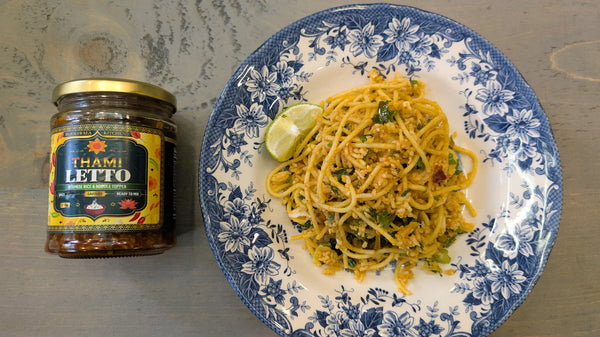
Thami Letto is a Burmese rice and noodle topper made from roasted peanuts, toasted sesame seeds, crispy fried onions and gram flour. You mix it through warm rice or noodles until every grain is coated. It is savoury and nutty with a gentle warmth, and it is made by hand in Hackney, London.
In short
- What it is: a ready to eat topper based on the Burmese dish htamin let thok.
- What it tastes like: nutty, savoury and gently warm. Not hot.
- Two versions: Fish, with sardines and fish sauce, and Vegan, with more peanuts and sesame.
- How to use it: two spoonfuls mixed through warm rice or noodles, with coriander, raw onion and lime.
- Who makes it: my mother Aamna, from a family recipe she has cooked for over 40 years.
Most condiments do one thing. A hot sauce brings heat. A chutney brings sweetness. A soy sauce brings salt. Thami Letto does something different. It brings everything at once, and it does not just sit on top of your food. It becomes part of it.
It is inspired by htamin let thok, a much loved street food dish eaten across Burma for generations. You mix it all the way through freshly cooked rice until every grain is coated. You finish with fresh coriander, sliced onion and a squeeze of lime. You eat it immediately. That is the whole recipe.

What is in Thami Letto?
Both versions of Thami Letto are built on a base of roasted peanuts, toasted sesame seeds, crispy fried onions and gram flour, all brought together with sunflower oil and warm Burmese spices. The Fish version adds sardines and fish sauce for a deep, umami rich savouriness. The Vegan version doubles down on peanuts and sesame for a bolder, nuttier result.
Every batch is made by hand in Hackney, London, by Aamna, who has been making this recipe for over 40 years. Just real ingredients, properly made.
| Thami Letto Fish | Thami Letto Vegan | |
|---|---|---|
| Base | Peanuts, sesame, fried onions, gram flour | Peanuts, sesame, fried onions, gram flour |
| What is different | Sardines and fish sauce | No fish, more peanuts and sesame |
| Flavour | Deeper and more savoury | Nuttier and richer |
| Suitable for vegans | No | Yes |
| Jar sizes | 175g and 275g | 175g and 275g |
Most toppings sit on the surface of a dish. Thami Letto gets mixed all the way through until every grain of rice carries the full weight of the flavour.
What does Thami Letto taste like?
Three words come up again and again when people try it for the first time: bold, nutty and savoury.
Bold. The boldness is not heat, though there is warmth from the spices. It is several strong flavours arriving at once. Crispy fried onions bring sweetness and depth. Fish sauce, in the Fish version, brings an umami punch. The spices bring an aromatic warmth that builds slowly rather than burning fast.
Nutty. Roasted peanuts and toasted sesame seeds are the backbone of both versions. When you mix Thami Letto through warm rice, the oil from the jar carries the nutty flavour into every grain, and the crushed peanuts and sesame give crunch in every mouthful.
Savoury. This is where gram flour earns its place. Fried until golden, it adds a toasty chickpea depth that gives the mixture body. In the Fish version, sardines and fish sauce add a deeper savouriness. In the Vegan version, the extra peanuts and sesame make a richer, creamier base.
People reach for comparisons that do not quite fit. It is a bit like chilli crisp, but nuttier and milder. It is a bit like dukkah, but richer. It is Burmese, and it tastes like itself.
What makes Thami Letto different?
Three Things That Set It Apart
- It is a meal, not just a condiment. Mix it through rice and you have a complete, satisfying dish in under five minutes.
- The texture is unlike anything else. Roasted peanuts, toasted sesame and fried gram flour give it crunch, body and depth.
- It is 40 years of home cooking in a jar. This is not a product developed in a lab. It is my grandmother's recipe from Burma, refined by my mother over more than 40 years, and finally bottled. You can read the story behind it.
Is Thami Letto a chilli crisp?
People often call it a Burmese chilli crisp, because it comes in a jar, has crunch and goes on rice. It is much milder than chilli crisp though, with gentle warmth rather than heat, and it is built on peanuts, sesame and fried onions rather than chilli. If you like chilli crisp but want something milder and nuttier, here is how the two compare.
How do you use Thami Letto?
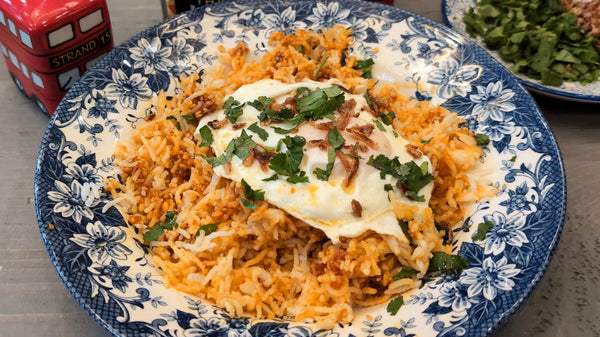
The classic method is simple. Freshly cooked rice, two generous spoonfuls of Thami Letto mixed all the way through, topped with fresh coriander, thinly sliced white onion and a generous squeeze of lime. Eat straight away while the rice is still warm. See what to put on plain rice for more.
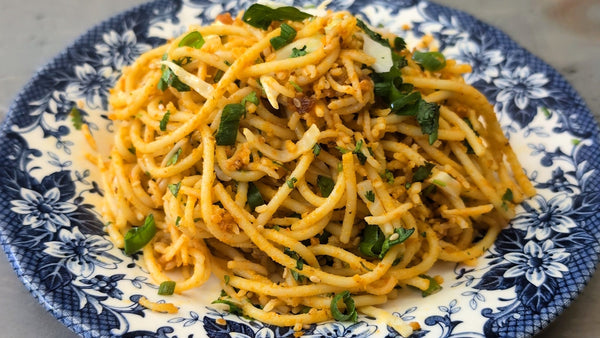
Beyond rice it works on noodles, scrambled eggs, toast with a fried egg, stirred into fried rice at the last minute, and loosened with water and soy sauce as a dipping sauce for dumplings. Once you have a jar on the counter, you will start putting it on everything.
Questions
Is Thami Letto spicy?
No. It is savoury and nutty with a gentle warmth, milder than chilli crisp.
What does the name mean?
Thami Letto is our own rendering of htamin let thok, which means rice mixed by hand.
Is there a vegan version?
Yes. Thami Letto Vegan has no fish and uses more peanuts and sesame. Thami Letto Fish contains sardines and fish sauce.
Does it contain nuts?
Yes. Both versions contain peanuts and sesame, and the Fish version contains fish. Check the jar label for the full allergen list.
Do you need to cook it?
No. It is ready to eat straight from the jar. Spoon it over warm rice or noodles and mix it through.
What sizes does it come in?
175g and 275g jars, in both Fish and Vegan.
✦ Burmawala Kitchen ✦
Ready to Try It?
Fish or vegan. Both handmade in Hackney. Both ready to use straight from the jar.
0 comments